
Visual Literacy Emotional Learning Before the Words
The Moment Before Words explores how children use visual literacy, emotional learning clues, and VNEC to understand feelings before text explains them.
Tank noticed it first.
Not with his eyes.
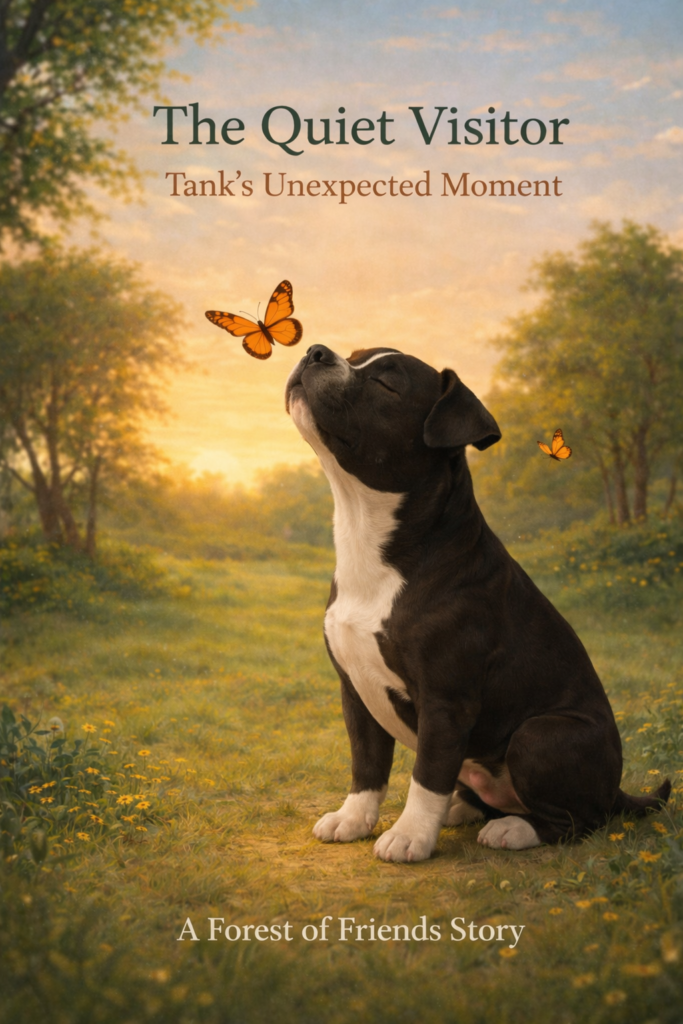
With something quieter.
The air didn’t feel the same.
The space around him slowed—just enough to notice.
He stood still.
Tuffie watched from a distance.
Her ears tilted slightly forward.
Not sharp. Not alarmed.
Focused.
“Hold on, son,” she said, low and steady.
JJ looked around.
Nothing moved.
Nothing changed.
But Tank hadn’t moved either.
And that… was different.
Then—
She stepped into view.
Lexus.
She didn’t rush forward.
Didn’t lower her head.
Didn’t raise it either.
Her body stayed neutral.
Her steps slow. Even.
Measured.
Tank didn’t bark.
Didn’t tense.
His shoulders dropped—just slightly.
His stance widened—not for defense, but balance.
He stayed.
Lexus stopped a few steps away.
Not close enough to touch.
Not far enough to leave.
Her eyes didn’t lock onto his.
They softened.
Tuffie’s tail flicked once.
JJ’s ears lifted.
MeMe leaned forward—just a little.
No one said anything.
But everything was happening.
Tank shifted his weight.
Forward.
Not fast.
Not cautious.
Just… willing.
Lexus matched him.
Step for step.
Not leading.
Not following.
Beside.
Tuffie gave a small nod.
JJ’s tail wagged—slow this time.
MeMe smiled.
Because sometimes—
Understanding doesn’t begin with words.
It begins with noticing.
🧠 What Did You Notice? (VNEC Moment)
Before reading anything else, pause.
What did you see?
- Tank’s body—did it feel tense or calm?
- Lexus’s movement—fast or controlled?
- The space between them—close or respectful?
- The others—watching or reacting?
Now ask:
👉 What does that tell you?
How VNEC Helps Children Slow Down and Notice
Visual literacy emotional learning is important because children often see emotional clues before they can fully explain them. A child may notice that a character is looking away, standing alone, leaning closer, hiding, or reaching out. Those details can start a conversation before the words on the page tell the whole story.
This is why The Moment Before Words fits naturally inside MeMe, JJ & Friends. The stories use real rescue pets, visual clues, and emotional moments to help children practice observation before interpretation. With VNEC, young readers can slow down, study what they see, and build emotional understanding through story evidence. VNEC, or Visual-Narrative Emotional Comprehension, gives children a simple process for that moment. First, they look at the picture without rushing. Then they name what they actually see. After that, they compare those visual clues with the words in the story. Finally, they connect the character’s experience to real-life emotions, choices, and relationships.
This matters because emotional learning should not always begin with a direct question like, “How do you feel?” Some children need a safer starting point. A picture book gives them that space. They can talk about what MeMe, JJ, Tuffie, Tank, Lexus, or Uno might be feeling before they have to talk about themselves.
Through MeMe, JJ & Friends, visual literacy emotional learning becomes part of the story experience. Children are not just reading words. They are observing evidence, thinking carefully, and learning that emotions can be seen in posture, distance, facial expression, body language, and action.
💛 Why This Matters
In the Forest of Friends, emotions aren’t always spoken.
They’re:
- Seen in posture
- Felt in space
- Understood through behavior
Tank didn’t need words to understand Lexus.
He needed time to notice.
📖 Continue the Story
Lexus’s story continues in Book 8 of the Forest of Friends series,
where Tank learns that not every connection has to be explained—
some are simply felt.