Helping Children Understand Emotions Through Visual Storytelling
VNEC — Visual Narrative Emotional Comprehension — helps children slow down, observe visual clues, and connect what they see in a story to emotional understanding.
VNEC is a structured instructional model that helps children develop emotional understanding and reading comprehension by teaching them to observe before they interpret.
Step 1: Observation
“What do you see?”
Students list only what they observe.
Step 2: Connect to the Words
After reading the text, ask:
“Did the words change what you noticed?”
Step 3: Explain the Clues
Students identify clues:
• posture
• facial expression
• proximity/distance
• environment
• repeated details
• changes from page to page
Ready to Try This with a Child?
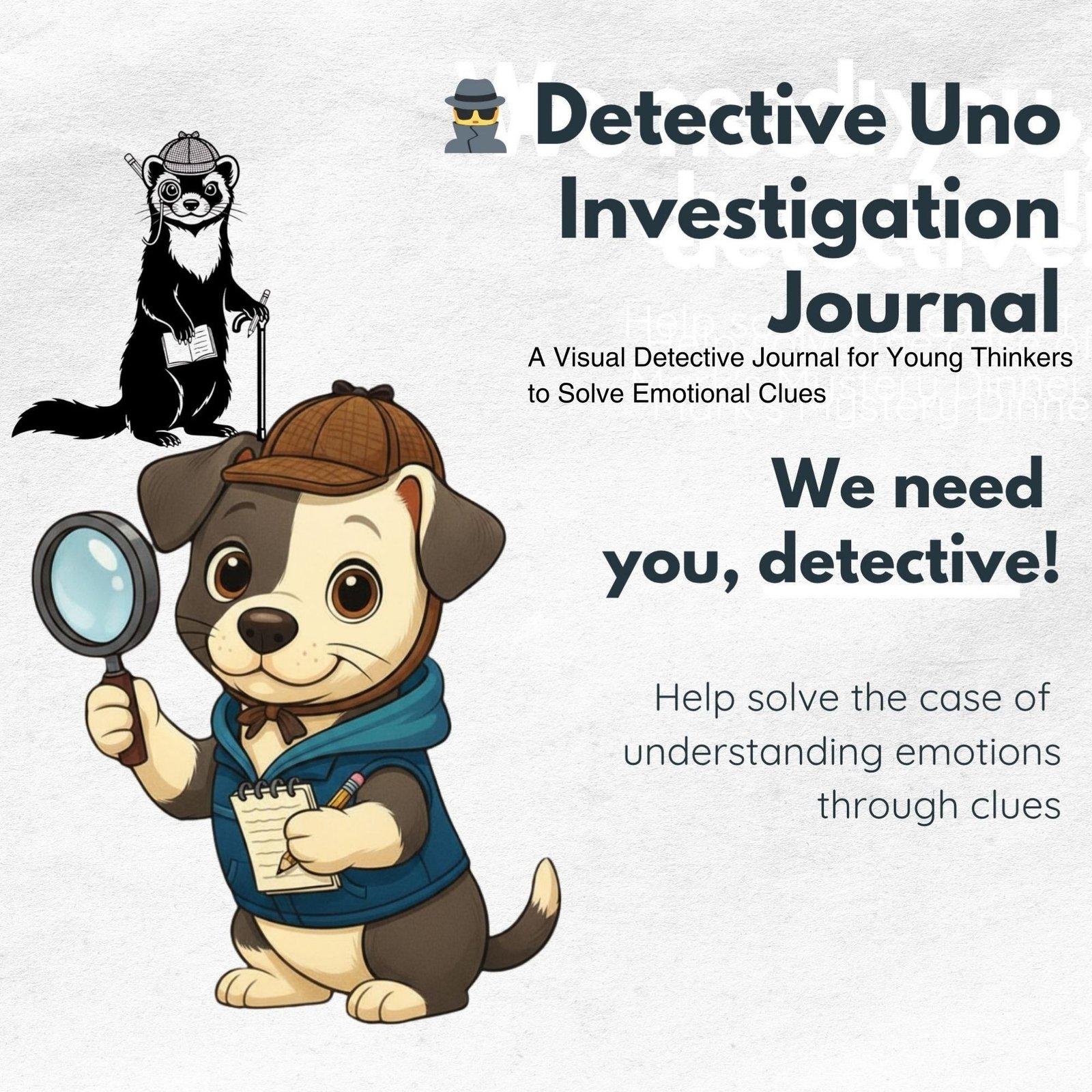
Get Your Free Detective Uno SEL Case File
Help kids practice spotting emotional clues through a fun story-based investigation inspired by the MeMe, JJ & Friends world.
✔ Helps kids identify emotional clues
✔ Encourages observation before assumptions
✔ Supports SEL + reading comprehension
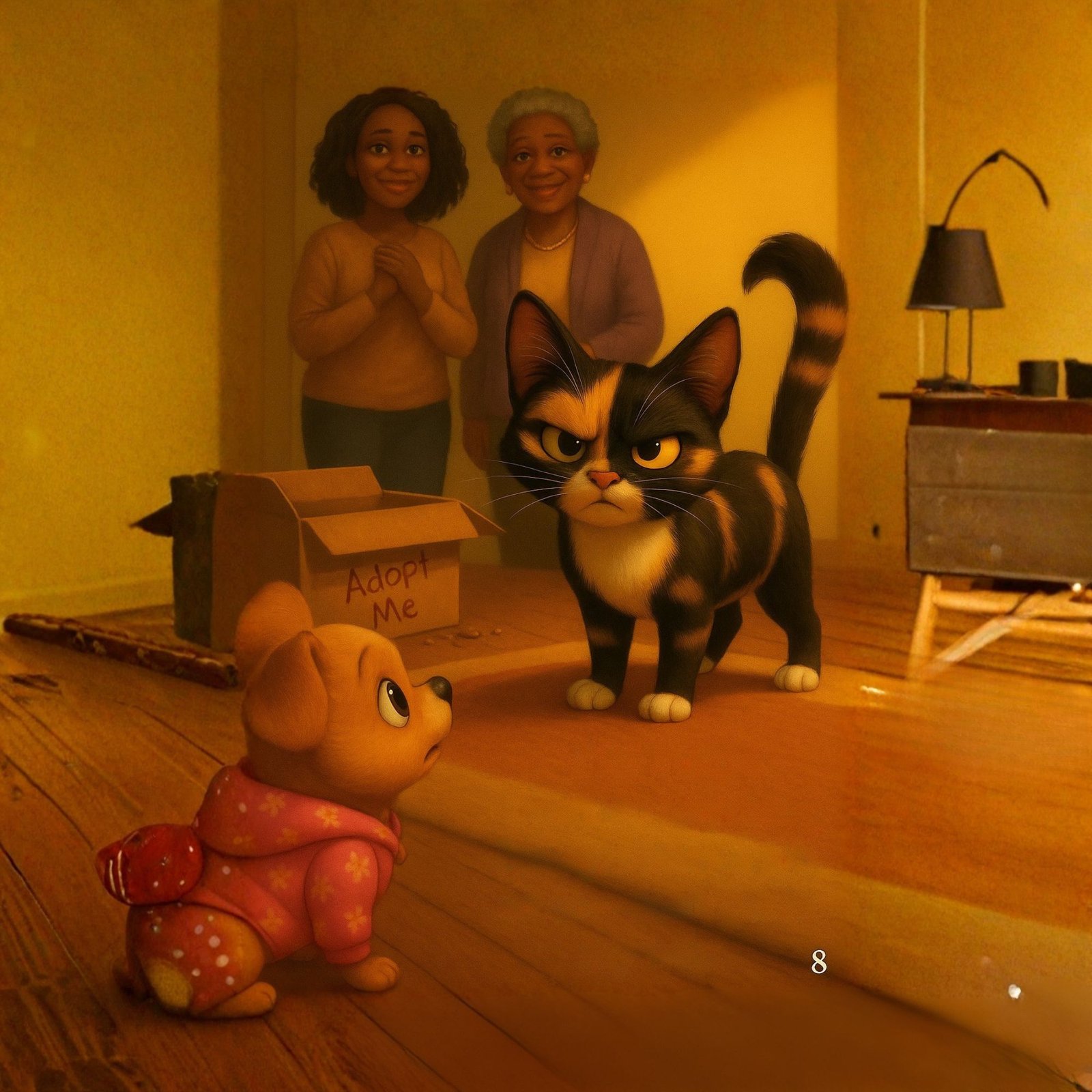
Phase 1: Observation: What Do You See?
Students are first presented with an illustration without text and asked to observe carefully before interpreting emotion.

After practicing observation and explaining the clues, students are able to develop a deeper understanding of the character’s emotional experience.
Example Outcome After Observation and Explanation of Clues

This moment reflects the result of the VNEC process.
Earlier in the story, students are guided to observe posture, proximity, and environmental cues before interpreting emotion.
How Students Arrive at This Understanding:
- Students view a selected SEL moment from the series without the story text
- They observe visual clues such as posture, facial expression, distance, movement, and setting
- They record or discuss what they notice as evidence
- The story text is introduced after observation
- Students compare their first interpretation with the words on the page
- The Detective Uno Journal reinforces the process through clue-gathering and reflection
MeMe SEL Academy uses key SEL moments from the MeMe, JJ & Friends series as visual learning scenes.
In the VNEC process, students are first shown the illustration without the story text. This gives them time to observe posture, facial expression, distance, movement, setting, and changes from earlier scenes before being told what is happening.
After observation, the text is introduced so students can compare their first ideas with the story.
The Detective Uno Journal supports this process by turning observation into clue-gathering, helping students notice details, explain what they see, and use evidence before naming emotions.
The Visual-Narrative Emotional Comprehension (VNEC) Model
The VNEC Model is a structured instructional approach that uses selected SEL moments from the MeMe, JJ & Friends series to help children slow down, observe visual evidence, and connect illustration clues to story meaning.
The model is built on three core principles:
- Pause the Story
Students begin with a selected illustration before the story text is shown. - Look for Visual Evidence
Students notice posture, facial expression, distance, movement, setting, and character positioning before naming emotions. - Connect Image to Text
After observation, the story text is introduced so students can compare their first interpretation with what the words reveal.
This approach supports emotional understanding, visual literacy, and inferential reading comprehension by teaching children to use evidence before reaching conclusions.
Instructional Focus
Through selected SEL moments from the MeMe, JJ & Friends series, students practice using visual evidence to understand character emotion, story meaning, and relationship changes.
- Inferential comprehension
- Visual literacy
- Contextual reasoning
- Evidence-based discussion
Why Emotional Comprehension?
Children often respond to what they see before they fully understand what is happening.
In classrooms, storytime, and peer relationships, students may:
- react quickly without reflection
- misread another person’s behavior
- name an emotion before noticing the evidence
- miss important visual clues in a scene
VNEC helps slow that process down.
Using selected SEL moments from the MeMe, JJ & Friends series, students first observe the illustration without the story text. They look for clues such as posture, facial expression, distance, movement, and setting.
Then, when the words are introduced, students compare what they first thought with what the story reveals.
This helps students move from quick reaction to thoughtful reasoning — strengthening emotional understanding, visual literacy, and inferential reading comprehension.
Our Pilot Exploration
MeMe SEL Academy is developing pilot opportunities for the Visual-Narrative Emotional Comprehension (VNEC) Model in early learning and elementary settings.
The pilot exploration focuses on selected SEL moments from the MeMe, JJ & Friends series. In these moments, the story text is removed first so students can observe the illustration before interpreting emotion or story meaning.
At key scenes, students are guided to:
- observe posture, facial expression, distance, movement, and setting
- notice visual clues before naming emotion
- compare their first observations with the story text
- explain their thinking using visual evidence
- reflect on how interpretation can change when observation deepens
Current Pilot Focus Areas
Early Learning Exploration — Pre-K / Head Start
- Short, guided observation moments using selected story scenes
- Focus on naming what students see before naming emotion
- Teacher-facilitated discussion using simple visual clues
- Observation-based conversation rather than worksheet-driven response
Upper Elementary Exploration — Grades 3–5
- Structured observation using selected SEL moments from the series
- Guided comparison between illustration-only viewing and full story text
- Evidence-based interpretation prompts
- Reflection questions grounded in observable illustration details
The goal of the pilot exploration is to refine VNEC as a practical literacy and SEL support that can be used in classrooms, libraries, and community learning settings.
How It Works
How It Works
- A key SEL moment is selected from the MeMe, JJ & Friends series.
- Students first view the illustration without the story text.
- Students observe visual clues such as posture, facial expression, distance, movement, setting, and character positioning.
- Students describe what they notice before naming emotion or interpreting the scene.
- The story text is introduced after observation.
- Students compare their first interpretation with what the words reveal.
- Discussion and reflection follow using evidence from both the illustration and the story.
This process helps students move from quick reaction to thoughtful reasoning while strengthening visual literacy, emotional comprehension, and inferential reading skills.
Current Development & Engagement
MeMe SEL Academy is currently developing and refining the VNEC Model through educator conversations, community literacy experiences, and selected classroom-adjacent demonstrations.
Current areas of development include:
- Creating structured visual observation prompts from selected SEL moments in the MeMe, JJ & Friends series
- Exploring early learning applications for Pre-K, Head Start, and elementary literacy settings
- Developing upper elementary discussion prompts that connect visual evidence, emotion, and story meaning
- Using the Detective Uno Journal as a clue-gathering tool for observation, reflection, and evidence-based discussion
- Building library, school, and community partnerships to increase access to the narrative texts
The work is currently in an active refinement phase, with a focus on practical implementation, educator feedback, and future pilot opportunities.
Growth & Development Vision
Over the next 12 months, MeMe SEL Academy will focus on:
- Continued refinement of the Visual-Narrative Emotional Comprehension (VNEC) Model through educator feedback, classroom-adjacent demonstrations, and future pilot opportunities
- Thoughtful expansion into early learning, elementary literacy, library, and community-based settings
- Development of clear teacher-facing guidance materials
- Creation of selected VNEC lesson samples using key SEL moments from the MeMe, JJ & Friends series
- Exploration of digital supports that preserve the integrity of observation-before-interpretation learning
- Ongoing conversations with literacy, early childhood, and teacher preparation professionals
The long-term vision is to establish a structured, story-integrated model that helps children slow down, observe visual evidence, and strengthen emotional understanding through illustrated narrative.
Founder
Serena Noreen Brown is a published author, veteran, and creator of the MeMe, JJ & Friends narrative series. Her work explores how illustrated storytelling can support emotional understanding, visual observation, relational awareness, and inferential comprehension.
Through educator conversations, community literacy experiences, and the development of selected SEL moments from her series, she began examining how visual elements in children’s literature — posture, facial expression, distance, movement, setting, and character positioning — influence emotional interpretation.
This exploration led to the development of the Visual-Narrative Emotional Comprehension (VNEC) Model.
MeMe SEL Academy represents the structured refinement of that work into an instructional approach designed to connect emotional comprehension, visual literacy, and narrative-based learning.
Community & Institutional Recognition
The MeMe, JJ & Friends series continues to build visibility through library placement, author recognition, educator engagement, and community literacy work.
- How JJ Met Tank, the Pit Bull was selected for the Jacksonville Public Library Local Author Collection.
- Uno’s Law has received a Library of Congress Control Number.
- How Serena Met JJ was featured in the IBPA Independent newsletter on March 20, 2026.
- MeMe Memory:The Day I Met Tuffie is listed in the Georgia Libraries Indie Bibliography.
- The VNEC Model was introduced to early childhood educators through a presentation at Savannah Technical College, supporting continued discussion around visual observation, emotional comprehension, and children’s literature.
- Adopt A Heart is a MeMe, JJ & Friends advocacy initiative connected to animal rescue, literacy, and community storytelling. The initiative has included Humane Society of Camden County engagement and participation in Woofstock in Ellijay, Georgia.
- Adopt A Heart also includes a community storytelling component where children and families can share short stories about connection, care, empathy, and animals.
This work continues to grow through educator dialogue, library visibility, community partnerships, and future pilot opportunities.
Let’s Explore Bringing VNEC to Your Organization
If you are an educator, literacy specialist, librarian, school leader, teacher preparation program, or community learning organization interested in the Visual-Narrative Emotional Comprehension (VNEC) Model, I welcome the opportunity to connect.
MeMe SEL Academy is currently exploring conversations, demonstrations, and future pilot opportunities that use selected SEL moments from the MeMe, JJ & Friends series to support visual observation, emotional comprehension, and inferential reading skills.
Bring VNEC to Your Organization
VNEC can be introduced through:
- Guided visual observation sessions using selected SEL moments from the MeMe, JJ & Friends series
- Classroom, library, after-school, or community literacy demonstrations
- Future pilot opportunities for early learning and elementary settings
- Educator workshops on observation-before-interpretation learning
- Detective Uno Journal activities that support clue-gathering and reflection
We welcome opportunities to collaborate, demonstrate, and explore VNEC in educational, library, and community-based settings.