
VNEC is a structured instructional model that helps children develop emotional understanding and reading comprehension by teaching them to observe before they interpret.
Step 1: Observation
“What do you see?”
Students list only what they observe.
Step 2: Reconsideration
After reading the text:
“Did your thinking change?”
Step 3: Analysis
Students identify clues:
- posture
- facial expression
- proximity
- environment
Phase 1: Observation: What Do You See?
Students are first presented with an illustration without text and asked to observe carefully before interpreting emotion.
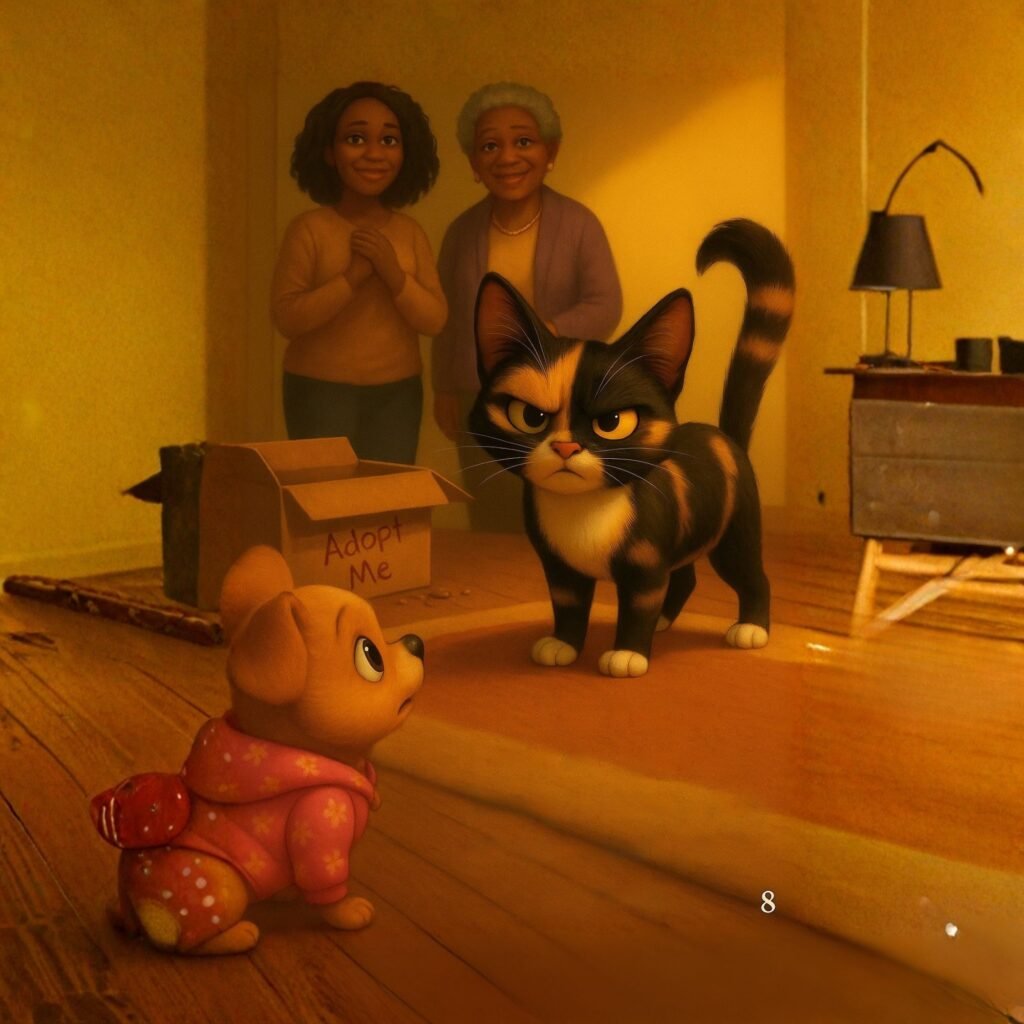
After practicing observation and analysis, students are able to develop a deeper understanding of the character’s emotional experience.
Example Outcome After Observation and Analysis
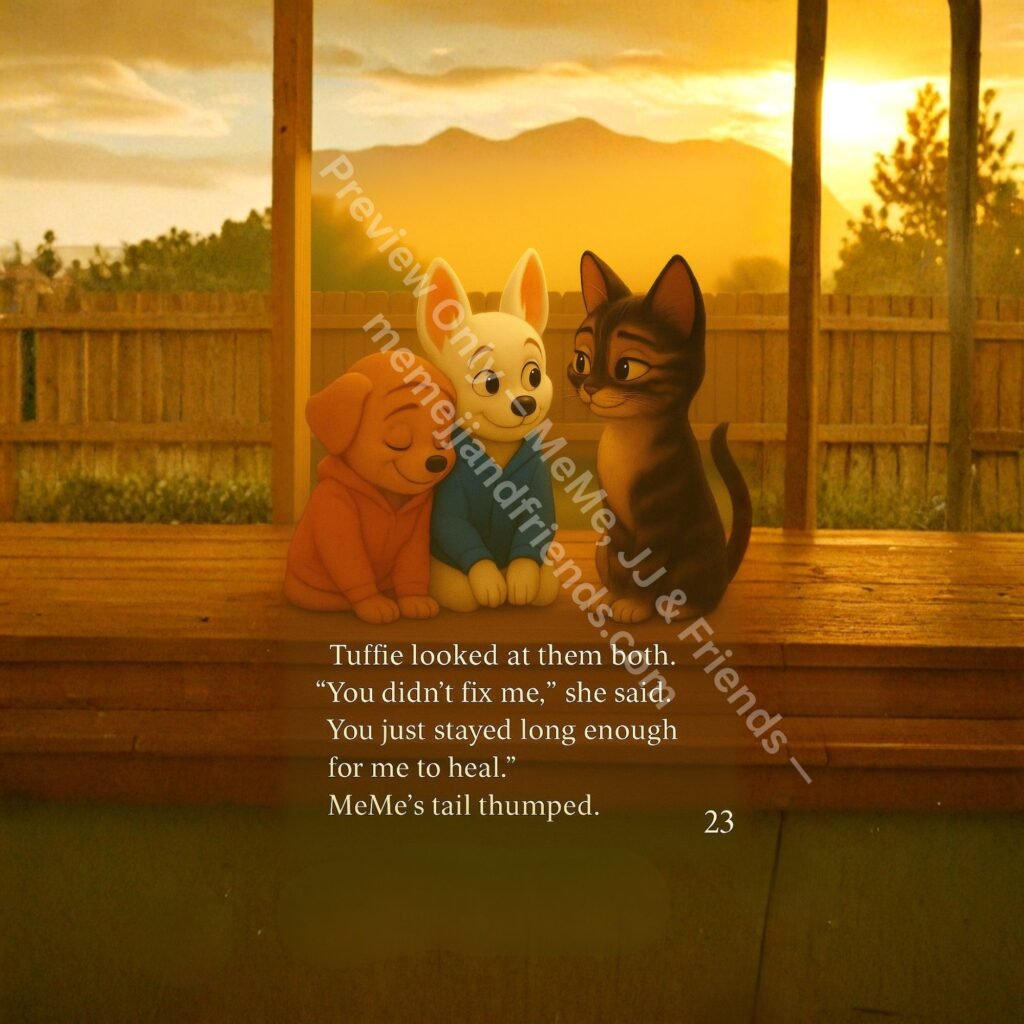
This moment reflects the result of the VNEC process.
Earlier in the story, students are guided to observe posture, proximity, and environmental cues before interpreting emotion.
How Students Arrive at This Understanding:
• Students first observe the illustration without labeling emotion
• They identify visual clues such as body posture and distance
• They reconsider their thinking after reading the text
• They use multiple cues to interpret the character’s emotional experience
Strengthening Emotional Understanding Through Structured Visual Observation
MeMe SEL Academy empowers students to interpret emotion and meaning through visual-narrative observation.
Our approach is simple and intentional:
Structured comprehension through intentional observation
Strengthening emotional and literacy understanding through illustrated narrative.
We begin with story.
Through character-driven narratives, students engage emotionally with characters before moving into structured observation. Rather than starting with worksheets or emotion labels, the VNEC Model invites students to pause, notice posture, gaze direction, and relational positioning, and justify their interpretations using visual evidence.
Connection comes first. Interpretation follows.
The Visual-Narrative Emotional Comprehension (VNEC) Model
The VNEC Model is a structured instructional approach that integrates illustrated narrative with guided visual analysis to strengthen emotional interpretation and inferential reading comprehension.
The model is built on three core principles:
- Structured Deceleration
Intentional pause at key narrative moments. - Visual Evidence Before Labeling
Students cite posture, gaze direction, spatial positioning, and relational contrast before naming emotional states. - Comparative Narrative Analysis
Students compare characters and scenes to identify emotional and relational shifts.
This approach integrates emotional awareness with literacy development, positioning illustrated narrative as a multimodal text requiring structured interpretation.
Instructional Focus
• Inferential comprehension
• Visual literacy
• Contextual reasoning
• Evidence-based discussion
Why Emotional Comprehension?
Across elementary classrooms, educators are navigating:
• Rapid emotional reactions without reflection
• Misinterpretation of peer behavior
• Overreliance on quick emotion labels
• A need for structured comprehension tools within literacy instruction
Students often make immediate emotional judgments based on limited cues. Without guidance, interpretation can become reactive rather than reflective.
Emotional comprehension is foundational to both learning and relationships.
When students learn to pause, observe posture and context, compare narrative moments, and justify their interpretations using evidence, they strengthen not only empathy — but inferential reading skills.
The MeMe SEL Academy integrates structured emotional interpretation into narrative literacy, helping students move from reaction to reasoning.
Our Pilot Exploration
We are currently piloting the Visual-Narrative Emotional Comprehension (VNEC) Model in classroom settings to refine a structured narrative-based instructional approach.
The pilot focuses on intentionally embedded “structured deceleration” moments within illustrated narrative texts. At key scenes, students are guided to:
• Observe posture, gaze direction, and spatial positioning
• Compare emotional and relational shifts across narrative moments
• Justify interpretations using visual and contextual evidence
• Reflect on how interpretation changes when observation deepens
Current Pilot Settings
🌼 Early Learning Exploration (Pre-K / Head Start)
• Short, guided observation moments during read-aloud
• Focus on noticing visual cues before labeling emotion
• Teacher-facilitated comparison of character positioning
• Observation-based discussion rather than worksheet-driven response
📘 Upper Elementary Exploration (Grades 3–5)
• Structured narrative deceleration at two key story moments
• Teacher-guided visual comparison across scenes
• Evidence-based interpretation prompts
• Reflection questions grounded in observable illustration details
The model is intentionally lightweight, requiring minimal preparation while integrating directly into literacy instruction.
How It Works
- Students engage with a character-driven narrative.
- At designated moments, the teacher intentionally pauses the story.
- Students observe posture, gaze direction, spatial positioning, and relational contrast within the illustration.
- Students compare characters across scenes and cite visual evidence before interpreting emotional meaning.
- Discussion follows observation, not assumption.
This structured deceleration strengthens inferential reasoning, visual literacy, and emotional comprehension within narrative texts.
Current Development & Engagement
• Narrative texts are currently being used in classroom read-aloud and literacy settings.
• Structured visual observation prompts are being explored in Early Learning environments.
• Upper elementary conversations are underway regarding implementation of the VNEC Model.
• Library placements continue to support community access to the narrative texts.
The MeMe SEL Academy is in an active refinement phase, growing through educator conversations, classroom exploration, and ongoing instructional development.
Growth & Development Vision
Over the next 12 months, the MeMe SEL Academy will focus on:
• Continued refinement of the Visual-Narrative Emotional Comprehension (VNEC) Model through classroom observation and educator dialogue
• Thoughtful expansion into additional elementary settings for structured exploration
• Development of clear teacher-facing guidance materials
• Exploration of digital supports that preserve the integrity of structured narrative deceleration
• Ongoing conversations with literacy and teacher preparation professionals
The long-term vision is to establish a structured, story-integrated model that strengthens emotional interpretation and inferential comprehension through illustrated narrative.
Founder
Serena N. Brown is a published author, veteran, and creator of the MeMe, JJ & Friends narrative series. Her work explores how illustrated storytelling can support emotional interpretation, relational awareness, and inferential comprehension.
Through classroom engagement and narrative development, she began examining how visual elements within children’s literature — posture, gaze direction, spatial positioning, and relational contrast — influence emotional interpretation. This exploration led to the development of the Visual-Narrative Emotional Comprehension (VNEC) Model.
The MeMe SEL Academy represents the structured refinement of that work into an instructional model designed to integrate emotional comprehension with literacy practice.
Community & Institutional Recognition
Selected for the Jacksonville Public Library Local Author Collection
Uno’s Law registered with the Library of Congress (Control Number assigned)
Introduced to early childhood educators through a presentation at Savannah Technical College, supporting ongoing discussion around observational learning and emotional comprehension in children’s literature.
Creator of the Adopt A Heart advocacy initiative, developed in partnership with the Humane Society of Camden County, with expanding community engagement including participation in Woofstock.
Adopt A Heart also includes a community storytelling component, where children and families can share short stories about connection, care, and emotional experiences with animals. These stories are compiled into a mini zine to support local shelter outreach and deepen real-world connections to empathy and emotional understanding.
This work continues to grow through classroom exploration and professional dialogue.
Let’s Explore Bringing VNEC to Your Organization
If you are an educator, literacy specialist, or teacher preparation program interested in learning more about the Visual-Narrative Emotional Comprehension (VNEC) Model, we welcome the opportunity to connect.
Bring VNEC to Your Organization
VNEC can be introduced through:
- Interactive read-aloud sessions
- Classroom or after-school pilot programs
- Educator workshops
We welcome opportunities to collaborate, pilot, and introduce VNEC in educational and community-based settings.