
Why Animal Stories Help Children Understand Emotions
Animal stories help children understand emotions by giving young readers safe characters, visual clues, and story moments to explore feelings, empathy, and friendship.
Animal stories help children understand emotions because children can watch a character’s choices, body language, facial expressions, and relationships before talking about their own feelings.
The wind howled outside.
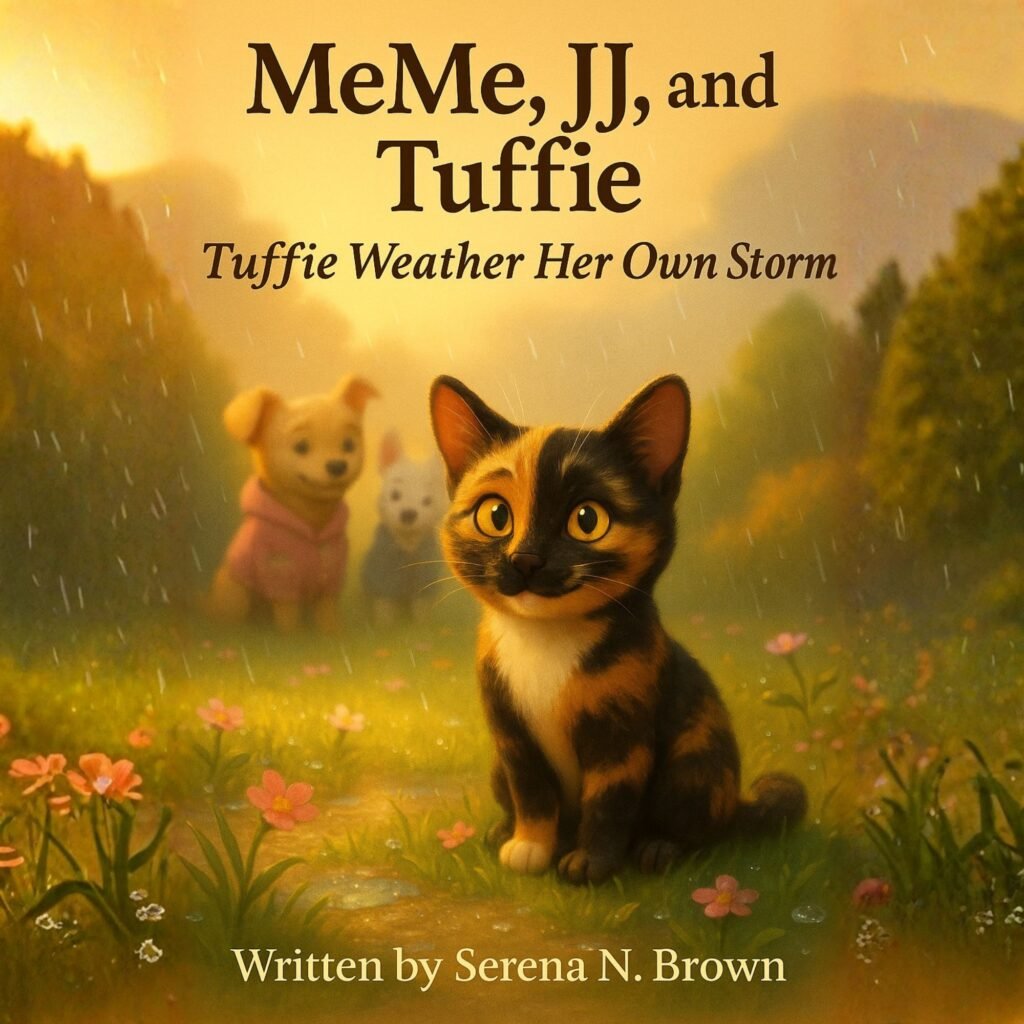
Rain tapped against the windows.And somewhere in the house…Tuffie was missing.
Uno’s ears popped straight up. “Emergency!” he barked. Ricky Ticky adjusted his detective hat. “Slow down,” he squeaked. “A good investigator uses evidence.” That is the first rule of VNEC—Visual Narrative Emotional Comprehension. Observe first. React second. Uno nodded. “Okay. What do we know?” Ricky Ticky pointed his tiny paw toward the living room.“
Let’s gather clues.” The two detectives noticed: JJ pacing near the window MeMe sitting unusually still dark clouds outside thunder rumbling overhead a blanket pushed halfway under a chair Uno gasped.
“Something terrible happened!” Ricky Ticky narrowed his eyes. “Maybe. But what does the evidence actually tell us?”
That’s what children learn through emotional literacy stories—how to look closely before making assumptions. Uno crawled toward the chair. Two bright eyes blinked back.
“TUFFIE!” Tuffie pressed herself deeper into the shadows. Uno whispered, “She’s hiding.” Ricky Ticky nodded. “But why?” They studied the clues. Her ears were back. Her body was tucked tightly. Her tail wrapped close. Her eyes were wide. ricky Ticky asked: “Do those clues look like anger… or fear? ”Uno thought carefully. “Fear.” “Why?” “Because she looks like she wants to protect herself.” Ricky Ticky smiled. “That’s VNEC.” Children build emotional intelligence when they learn to identify visual emotional clues instead of guessing too quickly.
Just then, MeMe walked softly toward Tuffie. No barking. No jumping. No pressure. Just presence. JJ sat beside MeMe quietly. Uno tilted his head.“ “They’re helping.”Ricky Ticky nodded.
“That’s called empathy.” Storms can feel scary. Big feelings can feel overwhelming. And sometimes friendship means understanding what someone feels without forcing them to explain. As thunder rolled outside, Tuffie slowly stepped forward. Not because the storm disappeared. But because she didn’t have to face it alone. SEO closing section. Stories like Storm of Friendship help children develop:emotional awareness empathy social emotional learning skills reading comprehension visual inference skills
Through the VNEC framework, children learn to observe body language, gather emotional evidence, and better understand how others may be feeling.
Characters like Tuffie, MeMe, JJ, Ricky Ticky, and Uno create emotionally safe storytelling moments that help children practice empathy through animal stories.
Ricky Ticky and Uno give children a playful way to investigate feelings instead of rushing to name them. When they look at Tuffie’s storm, they are not only asking, “What happened?” They are also asking, “What clues can we see?” Children can notice whether Tuffie looks guarded, quiet, tense, unsure, or ready to trust.
This mystery-style approach supports emotional learning because it turns feelings into something children can observe, discuss, and understand step by step. Instead of telling a child what a character feels, the story invites the child to look for evidence. A facial expression, a body position, a distance between characters, or a change in behavior can all become clues.
Through Ricky Ticky and Uno, young readers practice slowing down, thinking carefully, and connecting visual details to emotions. That makes the story useful for parents, teachers, and caregivers who want to help children build empathy, observation, and reading comprehension.
This also gives adults a simple way to guide discussion without turning the story into a lecture. Children can point to what they see, explain what they think, and connect the clues back to the character’s feelings. That makes emotional learning feel like discovery, not a test.