
Children drawing sometimes communicate hidden feelings. Sometimes they use words. Sometimes they use actions. And sometimes they communicate through a simple drawing placed on the refrigerator, folded into a backpack, or handed to a parent with a proud smile.
The question is: Are we really looking?
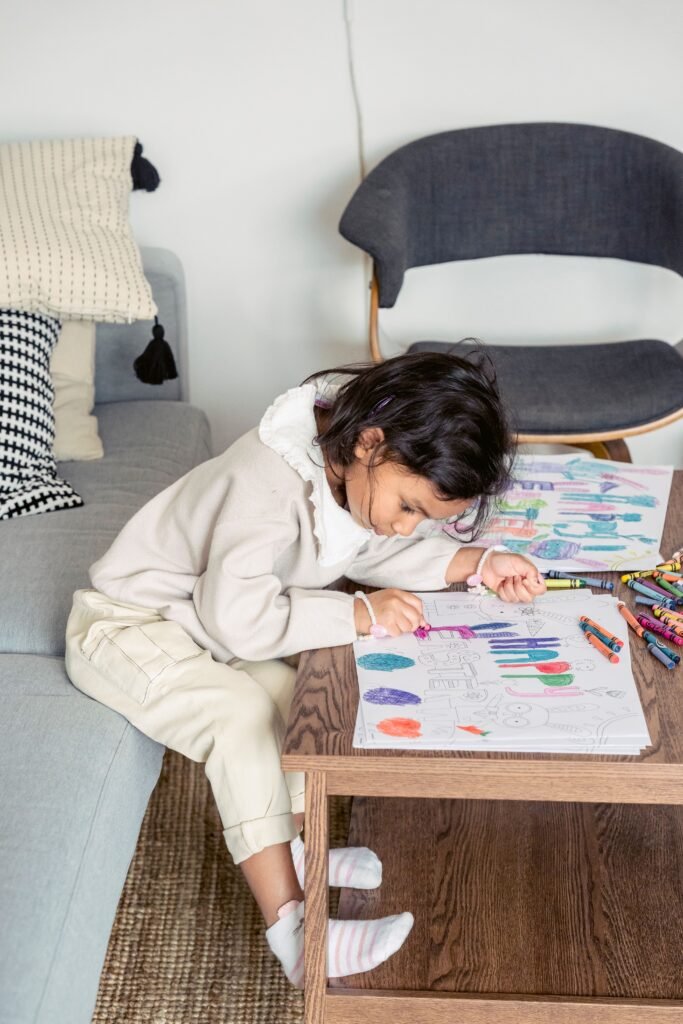
Many parents glance at a child’s drawing and see a stick figure, a colorful scribble, or a picture of a pet. Children often see something very different. They see a story, a memory, a feeling, a fear, a dream, or an experience they may not yet have the words to explain.
When we take a moment to ask questions about a drawing, we give children an opportunity to practice communication and emotional expression.
Instead of saying, “That’s nice,” try asking:
- Can you tell me about your picture?
- What is happening here?
- How is this character feeling?
- Why did you choose these colors?
- What happened before this scene?
- What happens next?
You may be surprised by the answers.
A drawing that appears simple to an adult may contain an entire story in the mind of a child. The child who drew a dog sitting alone may be talking about friendship. The child who drew a storm may be describing a difficult day. The child who filled a page with bright colors may be expressing excitement, joy, or imagination.
Do We Really See Our Children’s Emotions?
Children do not always have the words to explain what they feel. Sometimes they cry. Sometimes they shut down. Sometimes they act silly, loud, angry, or quiet. As adults, we may rush to correct the behavior before we understand the emotion behind it.
But what if the first step is not correction?
What if the first step is observation?
In the MeMe, JJ & Friends world, this is where Visual-Narrative Emotional Comprehension, or VNEC, begins. VNEC teaches children to slow down, look carefully, and use clues before reaching conclusions. The same idea can help parents at home.
When a child is upset, adults often ask, “What is wrong?” But a child may not know how to answer. Instead, we can begin by noticing what we see.
Is the child looking away?
Are their shoulders tight?
Are they crying instead of speaking?
Are they sitting alone?
Are they louder than usual?
Are they hiding behind anger because they feel embarrassed, scared, or overwhelmed?
These are emotional clues.
Reflecting a child’s emotion does not mean giving in. It means showing the child that you are paying attention. A simple sentence like, “You look frustrated,” or “It seems like that really hurt your feelings,” can help a child feel seen before they are ready to explain.
This matters because children learn emotional language through repeated experiences. When adults name what they notice with care, children begin to connect feelings with words. Over time, they can move from crying, yelling, or shutting down to saying, “I was scared,” “I felt left out,” or “I need help.”
Books and illustrations can make this easier. Before reading the words on a page, ask your child:
“What do you see?”
“What do you notice about the character’s face?”
“How is the character standing?”
“Does the character look close to others or far away?”
“What clues help you think that?”
These questions teach children to observe before labeling. They also help children understand that emotions are not always simple. A character who looks angry may really feel afraid. A child who acts silly may be trying to hide nervousness. A quiet child may not be ignoring you. They may be regulating.
This is one reason stories are powerful. Children can practice emotional understanding in a safe space before they face similar feelings in real life.
In MeMe, JJ & Friends, the animals often communicate through posture, distance, expression, and behavior. Their stories give children a chance to pause, notice, and think. That same habit can support reading comprehension, empathy, communication, and problem-solving.
The next time your child has a big feeling, try slowing down before reacting. Look first. Listen second. Then respond.
Sometimes the most important clue is not what a child says.
It is what they are trying to show.
Listening matters.
When adults show genuine interest in a child’s artwork, children learn that their ideas have value. They learn that their thoughts are worth sharing. They begin developing confidence in communication, storytelling, and self-expression.
This is one reason visual observation is so important. Before we tell children what we think we see, we can first ask them what they see. Observation before conclusion creates space for children to share their own perspective.
At MeMe, JJ & Friends, this idea is reflected in the Visual-Narrative Emotional Comprehension (VNEC) framework. Children are encouraged to observe visual clues, think about what they notice, and discuss possible meanings before jumping to conclusions. The same approach can be used with a child’s artwork.
The next time your child proudly hands you a drawing, pause for a moment before moving on to the next task.
Ask a question.
Listen to the answer.
You may discover that the drawing is not just a picture.
It is a conversation waiting to happen.