
Despite Artificial intelligence changing education faster than almost anyone imagined, children still need to read people. How children read people is recognizing emotions; however, children have to be taught how to read confusing emotions like a person crying when happy.
Students can now receive instant tutoring, personalized lessons, writing assistance, language translation, and feedback in seconds. Families are increasingly exploring AI-powered learning, homeschooling, microschools, and alternative education models that place technology at the center of learning.
There is no question that AI will become an important part of education’s future.
But there is one skill AI cannot learn for our children.
The ability to understand people.
Knowledge Isn’t the Same as Understanding
AI can explain photosynthesis.
It can solve algebra equations.
It can summarize historical events.
It can even help children brainstorm ideas for writing assignments.
What AI cannot do is teach a child how to notice the quiet classmate who suddenly withdraws from friends, recognize that someone’s smile is hiding disappointment, or understand why a child steps backward instead of forward during a conversation.
Those moments require observation.
They require emotional inference.
They require human connection.
The Future Belongs to Children Who Can Do Both
As AI becomes more capable, the skills that make us uniquely human become even more valuable.
Employers consistently rank communication, collaboration, problem-solving, empathy, adaptability, and emotional intelligence among the most important workplace skills. These abilities begin developing long before children enter the workforce.
They begin when children learn to notice.
Before they explain.
Before they judge.
Before they label.
Why Observation Matters
Children often rush to identify an emotion.
“He’s happy.”
“She’s mad.”
“They’re scared.”
But emotions are rarely understood from a single facial expression.
People communicate through posture.
Eye direction.
Body position.
Distance between individuals.
Movement.
Changes over time.
Context.
Learning to gather evidence before reaching conclusions is a skill that strengthens reading comprehension, critical thinking, and interpersonal relationships.
It is also one of the foundations of emotional intelligence.
Where VNEC Fits
This is the philosophy behind Visual Narrative Emotional Comprehension (VNEC).
Rather than asking children, “What emotion do you see?” VNEC begins with a different question:
What do you notice?
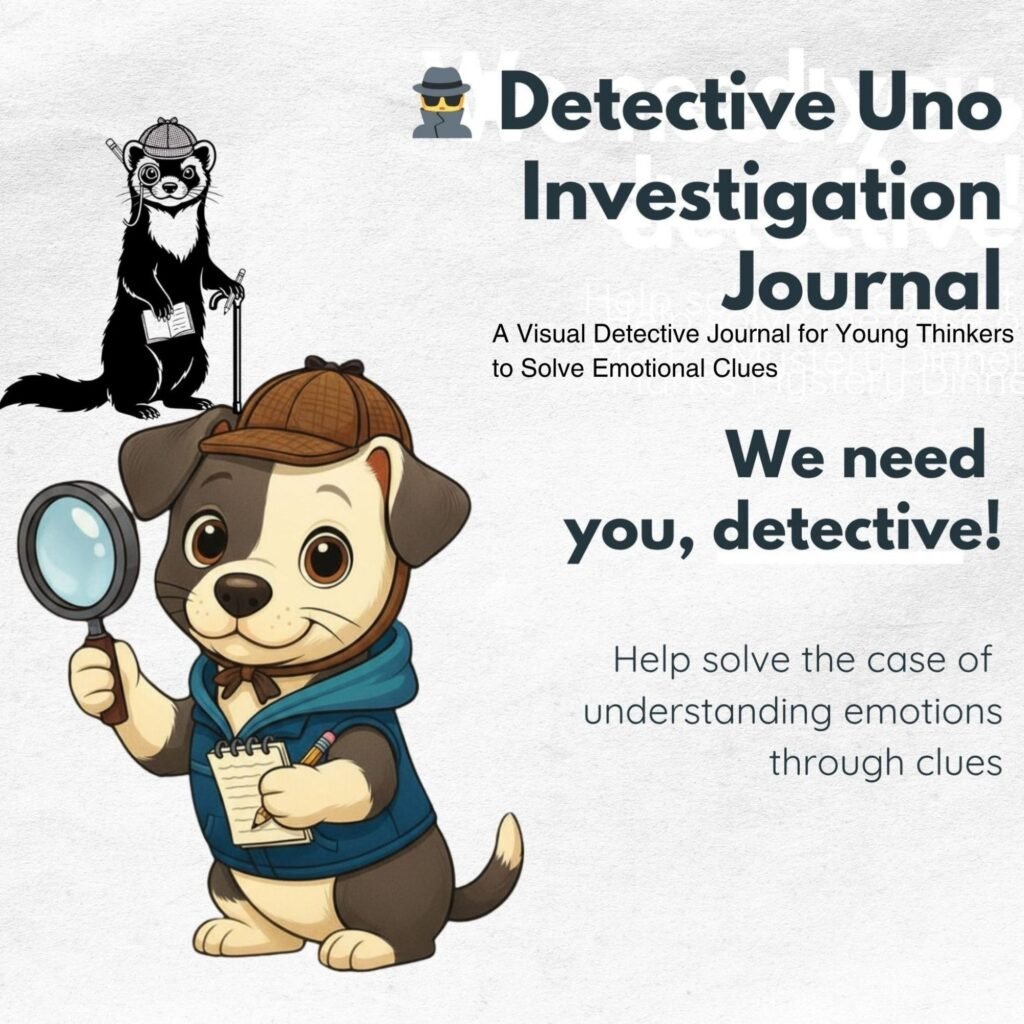
Children become investigators instead of guessers.
They examine visual evidence.
They compare clues across illustrations.
They support their thinking with observations.
Only then do they begin discussing what characters may be feeling and why.
This simple shift transforms emotional learning from memorizing feeling words into practicing evidence-based thinking.
AI and VNEC Are Partners, Not Competitors
Some people view AI as replacing educational approaches.
We see something different.
AI can personalize instruction.
AI can help teachers save time.
AI can generate practice activities.
AI can organize information.
But children still need opportunities to observe real interactions, interpret nonverbal communication, discuss different perspectives, and practice empathy with other human beings.
Technology can support those experiences.
It cannot replace them.
Preparing Children for Tomorrow
The children who thrive in tomorrow’s world will not simply be the ones who know the most facts.
They will be the ones who know how to work with others.
They will notice what others overlook.
They will communicate thoughtfully.
They will solve problems using both logic and compassion.
They will know when to trust information—and when to look more closely.
Those are human skills.
Those are life skills.
And they deserve just as much attention as reading, math, and technology.
As AI continues transforming education, let’s make sure we are also preparing children for the one subject that will always matter:
Understanding people.
At MeMe, JJ & Friends, we believe every story is an opportunity to slow down, observe carefully, think with evidence, and discover the emotions that words alone cannot always express. In an age of artificial intelligence, those very human skills may become more valuable than ever.
Today’s students can receive instant tutoring, personalized lessons, writing assistance, language translation, and homework support with just a few clicks. Families are increasingly embracing AI-powered learning, homeschooling, microschools, and alternative education as technology reshapes how children learn.
While these advances are exciting, they also highlight an important truth:
Children still need to read people.
Learning facts and learning people are two very different skills. As AI becomes better at delivering information, the ability to observe, interpret, and understand other human beings becomes even more valuable.
Why Children Still Need to Read People
Children communicate long before they can explain themselves with words.
They point.
They hesitate.
They move closer.
They step away.
They smile.
They avoid eye contact.
These behaviors tell stories that words sometimes cannot.
Teaching children to read people means helping them recognize nonverbal communication, body language, facial expressions, posture, personal space, and environmental clues before making conclusions. These observation skills build stronger emotional intelligence, better communication, healthier relationships, and improved critical thinking.
No artificial intelligence can replace those human experiences.
AI Can Teach Information
Artificial intelligence is an incredible educational tool.
AI can explain math problems.
AI can teach vocabulary.
AI can generate practice questions.
AI can personalize instruction for individual learners.
AI can even help children become more efficient learners.
These innovations should be embraced as valuable educational resources.
However, AI cannot replace the lived experience of noticing when a friend feels left out, recognizing uncertainty in someone’s posture, or understanding why a child suddenly becomes quiet during a group activity.
Facts can be generated instantly.
Human understanding takes practice.
Emotional Intelligence Is Becoming More Valuable
As technology advances, employers continue emphasizing the importance of communication, collaboration, empathy, adaptability, and problem-solving.
These are deeply human skills.
Children who learn to read people are better prepared to navigate classrooms, friendships, workplaces, and communities because they learn to gather evidence before making assumptions.
Observation becomes the foundation for understanding.
Understanding becomes the foundation for empathy.
Empathy becomes the foundation for stronger relationships.
How VNEC Helps Children Read People
At MeMe, JJ & Friends, we developed Visual Narrative Emotional Comprehension (VNEC) to strengthen exactly these skills.
Rather than immediately asking children, “What emotion do you see?” VNEC begins with a different question:
What do you notice?
Children become investigators rather than guessers.
They examine where characters are looking.
They observe body posture.
They notice distance between characters.
They compare illustrations.
They identify changes over time.
Only after gathering evidence do they begin discussing emotions and motivations.
This process teaches children to read people through careful observation instead of relying on assumptions.
AI and Emotional Intelligence Work Together
Some people ask whether AI will replace traditional teaching.
We believe the better question is how AI and human-centered learning can complement one another.
AI can accelerate learning.
Teachers inspire learning.
Parents guide learning.
Stories deepen learning.
Observation strengthens learning.
Together, these experiences prepare children for a future where technology and humanity work side by side.
Preparing Children for the Future
The future belongs to children who can do more than memorize information.
It belongs to children who can solve problems, communicate effectively, build relationships, recognize emotions, and understand the people around them.
That is why children still need to read people.
Technology will continue changing.
Artificial intelligence will continue improving.
But the ability to notice another person’s feelings, understand their perspective, and respond with compassion will always be one of life’s most valuable skills.
At MeMe, JJ & Friends, we believe every story offers children an opportunity to slow down, observe carefully, think critically, and discover the emotional clues that words alone cannot always reveal. In a world increasingly shaped by AI, helping children read people may be one of the most important lessons we can teach.