
1. Withdrawing or Moving Away → Sadness / Hurt
Discover how common animal behaviors childrens emotions can help children recognize emotions, build empathy, and strengthen social-emotional learning through observation and storytelling.
Animals often:
- Step away from others
- Lower their body
- Reduce interaction
Children do the same when they feel:
- Left out
- Hurt
- Overwhelmed
👉 This is not always “bad behavior”—it’s emotional communication.
2. Freezing or Staying Still → Fear / Uncertainty
Animals may:
- Pause suddenly
- Become still
- Watch carefully
Children mirror this when they:
- Enter a new environment
- Feel unsure
- Are trying to understand what’s happening
👉 Stillness often means processing, not disengagement
3. Increased Energy or Movement → Excitement / Anxiety
- Pace
- Jump
- Move quickly
Children show this through:
- Restlessness
- Talking more
- Difficulty sitting still
👉 This behavior can signal:
- Excitement
- Nervous energy
- Anticipation
4. Approaching Slowly → Trust Building
Animals build trust by:
- Moving gradually
- Observing before engaging
- Respecting space
Children do this when:
- Meeting new people
- Re-entering social situations
- Testing emotional safety
👉 Trust is often quiet and gradual—not immediate.
5. Turning Away or Avoiding Eye Contact → Discomfort
Animals may:
- Look away
- Turn their body
- Create distance
Children mirror this when they feel:
- Embarrassed
- Overwhelmed
- Unsure how to respond
👉 Avoidance is often a signal, not defiance.
👀 Where VNEC Changes the Learning
Most approaches stop at labeling:
- “The character is sad”
VNEC goes further by teaching children to prove it.
How Rescue Pets Create Opportunities for Social-Emotional Learning
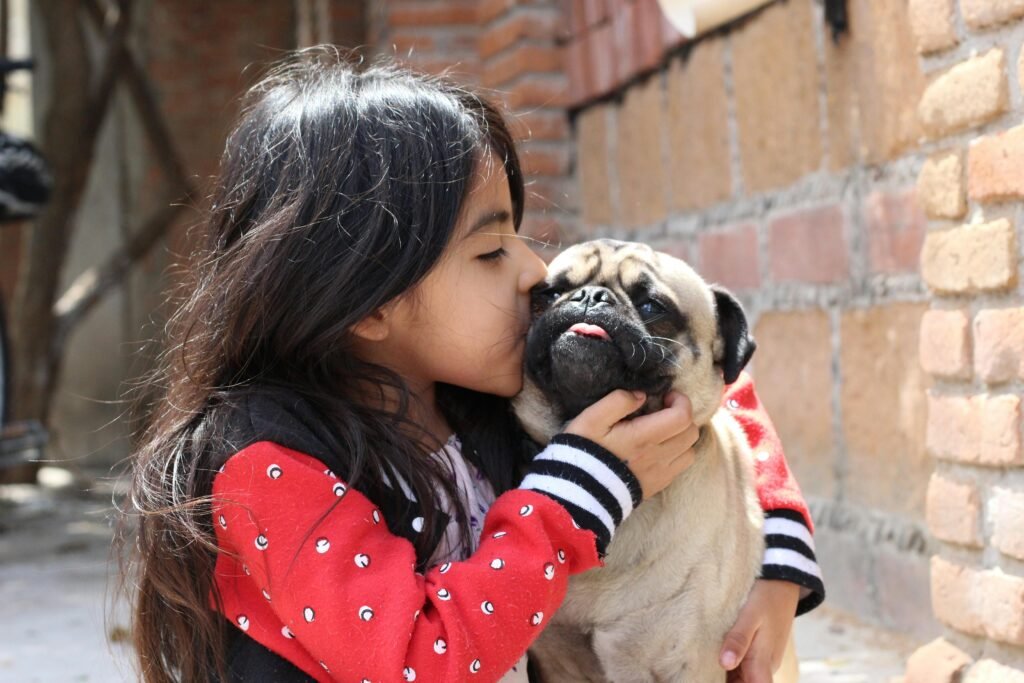
Many of the emotional behaviors children experience can also be observed in animals. While animals and humans communicate differently, both often express feelings through body language, posture, movement, facial expressions, and social interactions. Children are often surprisingly skilled at recognizing these emotional signals in animals, sometimes even before they can identify the same emotions in people.
A dog that hides during a thunderstorm may demonstrate fear or anxiety. A cat that avoids others after a stressful event may appear overwhelmed or uncertain. A shelter dog waiting quietly for attention may display behaviors that children interpret as loneliness, sadness, hope, or patience. These observations can become valuable opportunities for discussion and emotional learning.
Through VNEC, or Visual Narrative Emotional Comprehension, children learn to pay attention to visual clues rather than relying only on words. By observing an animal’s posture, distance from others, ear position, tail movement, eye contact, or overall behavior, children begin practicing emotional observation skills that can later transfer to human relationships and social situations.
Rescue pets often provide especially powerful examples because many have experienced change, uncertainty, loss, or adjustment. Their stories can create natural conversations about empathy, kindness, friendship, resilience, and healing. These discussions help children recognize emotions in others while also becoming more aware of their own feelings and experiences.
When parents, educators, and caregivers encourage children to observe animal behavior, they create opportunities for meaningful conversations that support emotional growth, compassion, and social-emotional learning.
🔍 Example Using VNEC
Step 1: What do you see (before reading)?
- The character is sitting apart
- Their head is lowered
- They are not interacting
Step 2: What changes when you read the words?
- The text confirms the character feels left out
Step 3: What emotion is supported by evidence?
- The child explains: “I think the character feels sad because they moved away, lowered their head, and stopped engaging.”
👉 This transforms learning from:
- Guessing
to - Evidence-based reasoning
🐶 Why This Works So Well With Familiar Characters
When children repeatedly see the same characters:
- They begin to recognize patterns
- They anticipate emotional shifts
- They connect behavior to meaning faster
For example:
- A normally confident character becoming still
- A social character withdrawing
👉 That contrast strengthens emotional understanding.
🔁 From Observation to Real-Life Application
Once children learn to read these behaviors in stories, they begin to notice them in real life:
- A classmate sitting alone
- A friend becoming quiet
- Someone avoiding eye contact
They move from:
- “Something is wrong”
to - “I think they might feel ___ because ___”
🧭 Final Thought
Animal behaviors mirror human emotions because they make feelings visible, observable, and interpretable.
When combined with VNEC, those behaviors become more than storytelling elements—they become:
- Tools for observation
- Opportunities for reasoning
- Foundations for empathy
Emotional understanding begins with noticing.
VNEC teaches children how to notice—and how to explain what they see.
If we want children to understand emotions, we don’t just tell them what to feel.
We show them what emotions look like—and teach them how to see.
Pingback: Why Are Animal Characters So Effective for Emotional Learning? - memejjandfriends.com