

Workplace literacy is often described as the ability to read instructions. That definition is too narrow.
In real professional settings, people must interpret signs, procedures, equipment conditions, body positioning, surrounding activity, warnings, and changing circumstances. They must decide what information matters, communicate what they notice, and choose an appropriate next step.
This is functional workplace literacy: using information to understand a situation and make a responsible decision.
For educators, workforce-learning professionals, counselors, and curriculum leaders, the goal is not to turn every classroom into a formal compliance-training site. The goal is to help students practice the thinking that supports career preparation: observe carefully, interpret evidence, compare options, and apply knowledge.
Workplace Literacy Includes More Than Written Words
A student may be able to read a sentence and still need practice applying it in context.
Consider a generic workplace sign showing that protective equipment is required. Reading the words is one task. Understanding what the sign means for the person, location, activity, and available equipment is another.
Students may need to ask:
- What does the symbol communicate?
- Where is the sign positioned?
- Who needs to respond to it?
- What activity is taking place nearby?
- What equipment or protective measure is relevant?
- What should a worker do before proceeding?
The same process applies to a written procedure. A worker may need to identify the sequence of steps, notice a condition that has changed, and communicate a concern before continuing.
That is why workplace literacy combines reading comprehension, visual literacy, situational awareness, communication, and decision-making.
The Information Around a Task Matters
Workplace decisions rarely depend on one isolated detail.
A learner may need to interpret several kinds of information at once:
Signs and warnings
Signs may communicate direction, restriction, caution, required equipment, or an area that needs attention. Students can practice identifying the purpose of a sign without assuming that every symbol means the same thing in every context.
Instructions and procedures
Procedures often require sequence and attention to detail. Learners can examine a short, classroom-created procedure and identify:
- What happens first?
- What condition must be checked?
- When should a person pause?
- Who should be informed if something is unclear?
- What evidence supports the next action?
Equipment conditions
Equipment may appear ready for use, but visual details can raise questions. Is a component missing? Is a warning indicator visible? Does the condition match the procedure? Students should learn to distinguish what they observe from what they assume.
Body positioning and surrounding activity
People’s locations and movements can affect a situation. A learner might need to notice whether someone is standing in a pathway, reaching toward equipment, or working close to another activity.
These observations support hazard recognition and communication. They do not replace workplace-specific instruction or official safety training. Instead, they build a foundation for asking better questions and recognizing when a situation needs attention.

Connecting Workplace Literacy to VNEC
MeMe JJ and Friends LLC is a story-driven education and workforce-learning company. Its broader learning approach uses original characters, visual evidence, authentic scenarios, and real-world problem solving to help learners connect academic skills to practical situations.
One useful structure is VNEC:
Observe → Interpret → Compare → Apply
Although VNEC is associated with visual narrative and emotional comprehension, the same sequence can support career-connected learning when students examine a workplace-style scenario.
1. Observe
Students begin with what they can see, read, or identify.
They might examine a picture of a work area, a generic warning symbol, a short procedure, or an equipment-condition card.
The prompt is simple:
“What do you notice?”
Students should record details without immediately labeling the situation as safe, unsafe, correct, or incorrect.
2. Interpret
Students explain what the evidence might mean.
They can identify possible hazards, required actions, communication needs, or questions. At this point, multiple interpretations may be possible. The educator can ask:
“What detail led you to that conclusion?”
This keeps the discussion evidence-based.
3. Compare
Students compare possible responses.
For example, should a worker:
- continue immediately?
- pause and check the procedure?
- ask a supervisor for clarification?
- communicate a condition to a teammate?
- select appropriate PPE for the task?
Students can compare the likely purpose, benefit, and limitation of each option without pretending that a classroom exercise provides official workplace authorization.
4. Apply
Students apply the reasoning to a new context.
A classroom activity might present a different sign, a new layout, or a changed equipment condition. Learners then explain how their decision-making process transfers.
This is where academic learning becomes career preparation. Students use reading, speaking, visual analysis, comparison, and reasoning in a professional scenario.

Classroom Prompts for Functional Safety Literacy
Educators can build workplace literacy through short, structured activities.
Use a “pause before action” scenario
Present students with a fictional workplace situation containing several details. Ask them to identify what should be checked before anyone proceeds.
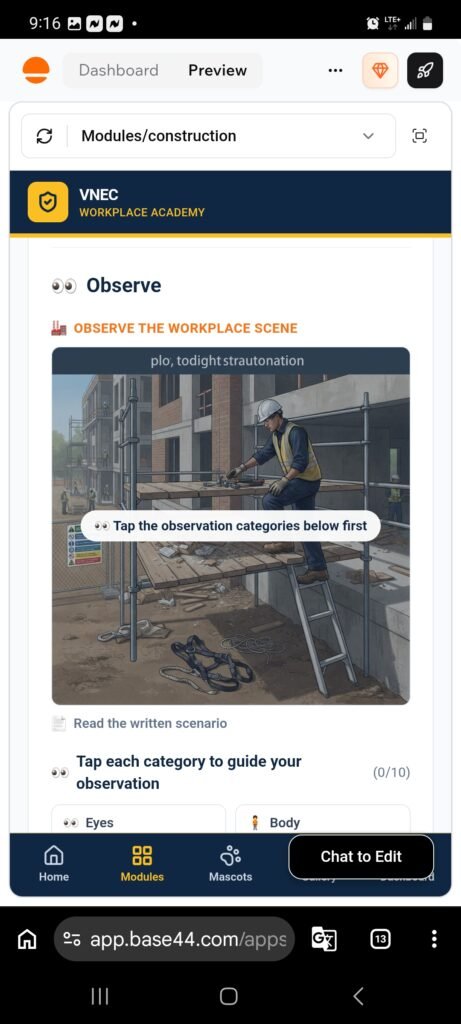
Prompts may include:
- What is visible?
- What is missing?
- What might require clarification?
- Who needs to be informed?
- Which detail could change the decision?
Practice workplace communication
Have students explain an observation to a partner using a clear format:
“I noticed ____. I think it may matter because ____. I would ask or communicate ____ before continuing.”
This supports concise communication without requiring students to guess at technical procedures.
Compare two possible choices
Give students two responses to the same scenario. Ask them to identify:
- what each option assumes
- what evidence supports each option
- what information is still missing
- which question should be asked next
The goal is not to reward fast answers. It is to develop situational awareness and responsible reasoning.
Connect academic skills to careers
A science lesson can examine environmental conditions. A language arts lesson can analyze procedural writing. A mathematics lesson can involve sequencing, measurement, or interpreting a simple data display. A counseling or advisory lesson can focus on asking for clarification and communicating concerns.
These connections help students see that workplace skills are not separate from school learning. They are applications of skills students are already developing.

Why This Matters for Career Preparation
Students benefit from seeing that career readiness includes more than choosing a job title.
It also includes learning how to:
- notice relevant information
- interpret visual and written communication
- recognize when conditions have changed
- communicate clearly with others
- compare possible responses
- ask for clarification
- apply classroom knowledge to authentic situations
This approach can support workplace awareness before students enter a professional environment. It also gives educators a practical way to connect literacy, SEL, critical thinking, and career exploration.
MeMe JJ and Friends LLC develops story-driven learning experiences that help learners move from observation to understanding and from understanding to action. Through VNEC and authentic professional scenarios, educators can invite students to investigate situations rather than rush toward conclusions.
The central question is not simply, “Can you read the sign?”
It is:
“Can you understand what the information means here, explain your reasoning, and choose a responsible next step?”
That is the deeper purpose of functional workplace literacy.
To explore MeMe JJ and Friends LLC’s MeMe SEL Academy, VNEC resources, or educator inquiry options, visit the educator inquiry page. These resources offer a starting point for conversations about visual observation, evidence-based thinking, literacy, and real-world learning.