
How JJ’s Story Supports Emotional Development
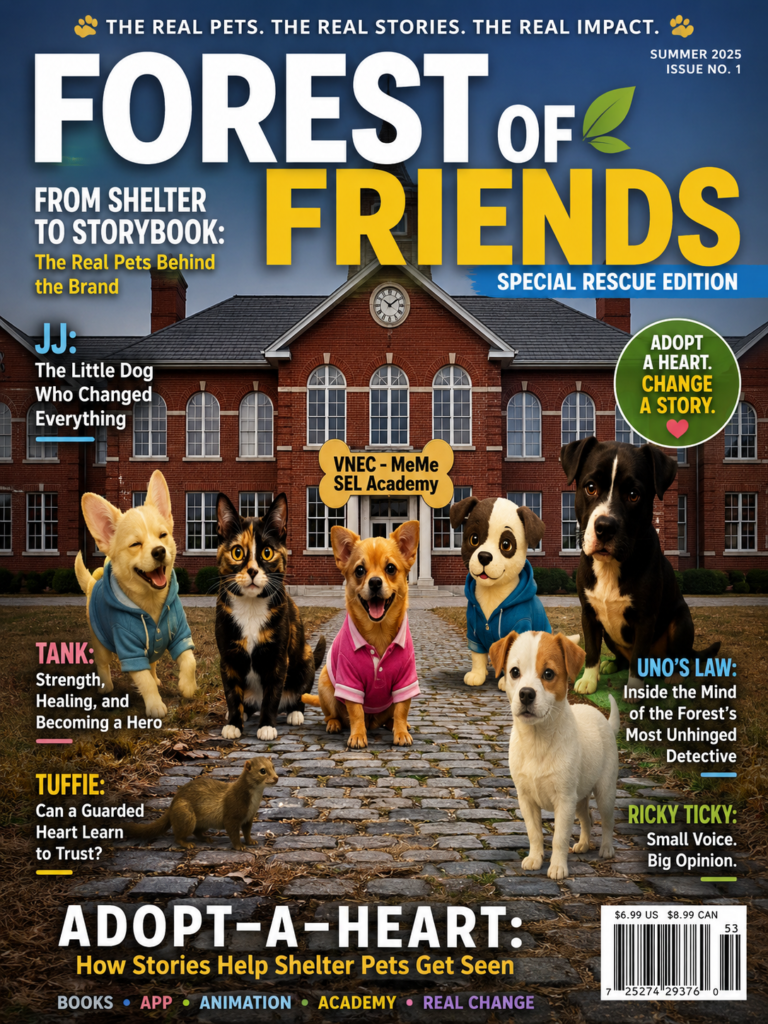
JJ Signs His Name supports children emotional development through a gentle rescue pet story about kindness, connection, empathy, and noticing feelings.
Tank stood tall at the edge of the street, his eyes wide as music filled the air.
Drums beat loudly. People laughed. Green was everywhere.
Uno bounced beside him. “This is the BEST day ever!” he barked, wagging his tail so fast it almost lifted him off the ground.
Tank blinked slowly. “It’s… a lot.”
Uno tilted his head. “You don’t like it?”
Tank didn’t answer right away.
He watched.
The flags waving.
The dancers stepping in rhythm.
The little kids laughing as beads flew through the air.
“I think I do,” Tank said finally. “I just need a minute to take it all in.”
Uno paused.
He looked around the way Tank was looking.
Not just at the noise… but at the details.
“Oh…” Uno said softly. “There’s more going on than I thought.”
Tank nodded.
A group passed by wearing bright green hats, smiling and waving.
Uno wagged his tail again—but this time, a little slower.
“It’s not just loud,” Uno said. “It’s kind of… happy.”
Tank smiled.
“Yeah,” he said. “You just have to look a little longer.”
Uno sat beside him as the parade continued.
This time, they watched together.
What Children Can Learn From JJ’s Paw Print
JJ’s paw print is more than a cute moment. It becomes a simple way for children to understand kindness, connection, and memory. When JJ signs his name, he is not using words. He is using a gentle action to show that the child matters. For young readers, this can open an important conversation about how care can be shown through small, thoughtful gestures.
This story also connects naturally to VNEC, or Visual Narrative Emotional Comprehension. Children can look closely at the scene and ask what they notice. How does the child seem to feel? What might JJ be thinking? Why does the paw print become special? These questions help children slow down, observe body language, notice facial expressions, and think about emotions that may not be spoken out loud.
A parent or teacher can use this story as a short social-emotional learning discussion. Children can talk about a time when someone made them feel seen or remembered. They can also think about how they might show kindness to a friend, classmate, family member, or pet. JJ’s quiet act becomes a bridge between story and real life.
Through this simple paw print, children learn that kindness does not always have to be big or loud. Sometimes the smallest mark can leave the biggest memory.
A Simple VNEC Question for Young Readers
After reading JJ’s story, ask the child to look closely and answer one simple question: “What do you think JJ wanted the child to feel?” Some children may say happy. Others may say special, loved, excited, or proud. Each answer gives the child a chance to explain what they noticed and why it mattered.
This is the heart of VNEC. The child is not just reading the story. The child is learning to notice emotion, explain a feeling, and connect that feeling to real life. JJ’s paw print becomes a gentle way to help children understand that kindness can be seen, remembered, and shared.
As part of the MeMe, JJ & Friends series, JJ’s story reminds children that friendship, kindness, and empathy often begin with simple moments. Through real rescue pet-inspired characters, young readers are encouraged to notice emotions, build meaningful connections, and understand how small acts of care can make a lasting difference.
JJ’s quiet signature shows how MeMe, JJ & Friends uses rescue pet stories to support children’s emotional growth.