

A student studies measurement in math, writes a set of instructions in English language arts, examines evidence in science, and discusses community needs in social studies.
These activities may look like traditional academic work.
They can also become early introductions to engineering, communications, environmental science, public service, project coordination, and many other career pathways.
That is the purpose of career-infused learning: connecting academic concepts to authentic professional situations so students can understand not only what they are learning, but also where those skills may be used.
Career-infused learning is not about asking children to choose a career too early.
It is about helping learners notice possibilities.
It gives academic knowledge a setting, a purpose, and a reason to matter.
What Is Career-Infused Learning?
Career-infused learning intentionally connects classroom instruction with the knowledge, habits, communication skills, and problem-solving practices used in the world of work.
It may include:
- A mathematics lesson framed around planning, measuring, or budgeting
- A science activity connected to observation, testing, or environmental investigation
- An English language arts assignment focused on workplace communication
- A social studies project involving community needs and civic decision-making
- A group challenge that requires collaboration, comparison, and responsible action
The academic standard remains important.
The career connection gives students another way to understand it.
Career-connected learning organizations often describe this approach as a combination of career awareness, exploration, and experience connected to academic learning. Resources from CareerTech.org and ACTE offer broader context for career exploration during the middle grades.
The goal is not to turn every classroom into a job-training program.
The goal is to make the relationship between school skills and real-world responsibilities more visible.

A Classroom Example: From Academic Task to Professional Situation
Imagine a teacher introducing a unit on clear communication.
A traditional assignment might ask students to write a paragraph explaining how to complete a task.
A career-infused version might present a proposed professional situation:
“You are part of a community event team. Visitors need simple instructions for finding three locations. What information should your guide include, and how will you make sure the directions are easy to follow?”
It is a sample classroom activity that shows how a familiar academic skill can be placed inside an authentic context.
Students still practice writing.
But they also need to:
- Observe the information available.
- Interpret what a visitor may need.
- Compare possible directions for clarity and completeness.
- Apply their learning by creating and revising a guide.
- Communicate their decisions to classmates.
The professional connection makes the academic task more concrete.
Students may begin asking useful questions:
- “What could confuse someone?”
- “Which detail is most important?”
- “How would the reader know what to do next?”
- “What should we check before sharing this?”
Those are workplace questions, but they are also strong academic questions.
Why Authentic Situations Support Real-World Academics
Career-infused learning helps students practice transferring knowledge.
Transfer means using something learned in one setting in a different setting.
A student may understand fractions during a worksheet but need a different kind of reasoning to use fractions while adjusting a recipe, dividing supplies, or interpreting a measurement.
A student may identify evidence in a reading passage but need to apply evidence differently when comparing instructions, reviewing observations, or explaining a decision to a team.
This is where career readiness and academic learning overlap.
Students practice:
- Observation : noticing relevant information
- Interpretation : making meaning from details
- Comparison : examining options, sources, or conditions
- Application : using knowledge to complete a task
- Communication : explaining thinking clearly
- Decision-making : choosing a response and giving reasons
- Collaboration : listening, contributing, and revising
These skills do not belong to only one profession.
They appear across many academic and workplace settings.
Using the VNEC Process to Make Thinking Visible
MeMe JJ and Friends LLC uses VNEC : Visual-Narrative Emotional Comprehension : as an instructional model built around evidence and thoughtful interpretation.
For career-infused learning, the process can be expressed as:
1. Observe
Ask: What do you see?
Students begin with visible or measurable information rather than an immediate conclusion.
In a classroom activity, they might examine a diagram, a sign, a map, a photograph, a set of instructions, or a story illustration.
2. Interpret
Ask: What might these details mean?
Students form an idea based on what they noticed.
They should be encouraged to distinguish between an observation and an interpretation.
For example:
- Observation: “The instruction has three numbered steps.”
- Interpretation: “The process may be intended to be completed in order.”
3. Compare
Ask: What changes when we compare the evidence?
Students may compare two diagrams, a first draft and a revised draft, an illustration and accompanying text, or their own conclusion with a partner’s reasoning.
Comparison creates space for reconsideration.
It also helps students understand that better decisions often come from reviewing more than one source of information.
4. Apply
Ask: How will you use what you learned?
Students take action.
They may revise a document, explain a procedure, identify a concern, design a solution, or communicate a recommendation.
VNEC is not presented as clinical validation or official workforce certification.
It is an instructional approach that can help learners slow down, use evidence, and connect observation to meaning and action.
Practical Career-Infused Learning Examples
Mathematics and Project Coordination
Students can plan a hypothetical classroom event using a fixed number of materials and a simple budget.
They might calculate quantities, compare prices supplied by the teacher, and explain which choices fit the available resources.
The academic skills include operations, estimation, and reasoning.
The career connections may include project coordination, purchasing, event planning, or small-business management.
Science and Environmental Observation
Students can examine a proposed schoolyard observation log.
They might record conditions, compare changes over time, and identify what additional information would be needed before making a conclusion.
The academic skills include measurement, classification, and evidence-based explanation.
The career connections may include environmental science, agriculture, conservation, or laboratory work.
English Language Arts and Workplace Communication
Students can revise a set of unclear instructions for a fictional audience.
They must consider word choice, order, tone, and the reader’s likely questions.
The academic skills include writing, editing, sequencing, and audience awareness.
The career connections may include technical writing, customer service, communications, administration, or public information.
Social Studies and Community Problem Solving
Students can compare two proposed solutions to a fictional community challenge.
They can identify who may be affected, examine the available evidence, and present a recommendation.
The academic skills include civic reasoning, source comparison, speaking, and perspective-taking.
The career connections may include public service, community planning, advocacy, and local government.
Each example should be adapted to the students’ age, curriculum, and available information.
The professional situation should support the academic goal: not distract from it.
How Story-Driven Learning Can Support Career Awareness
MeMe JJ and Friends LLC is a story-driven education and workforce-learning company.
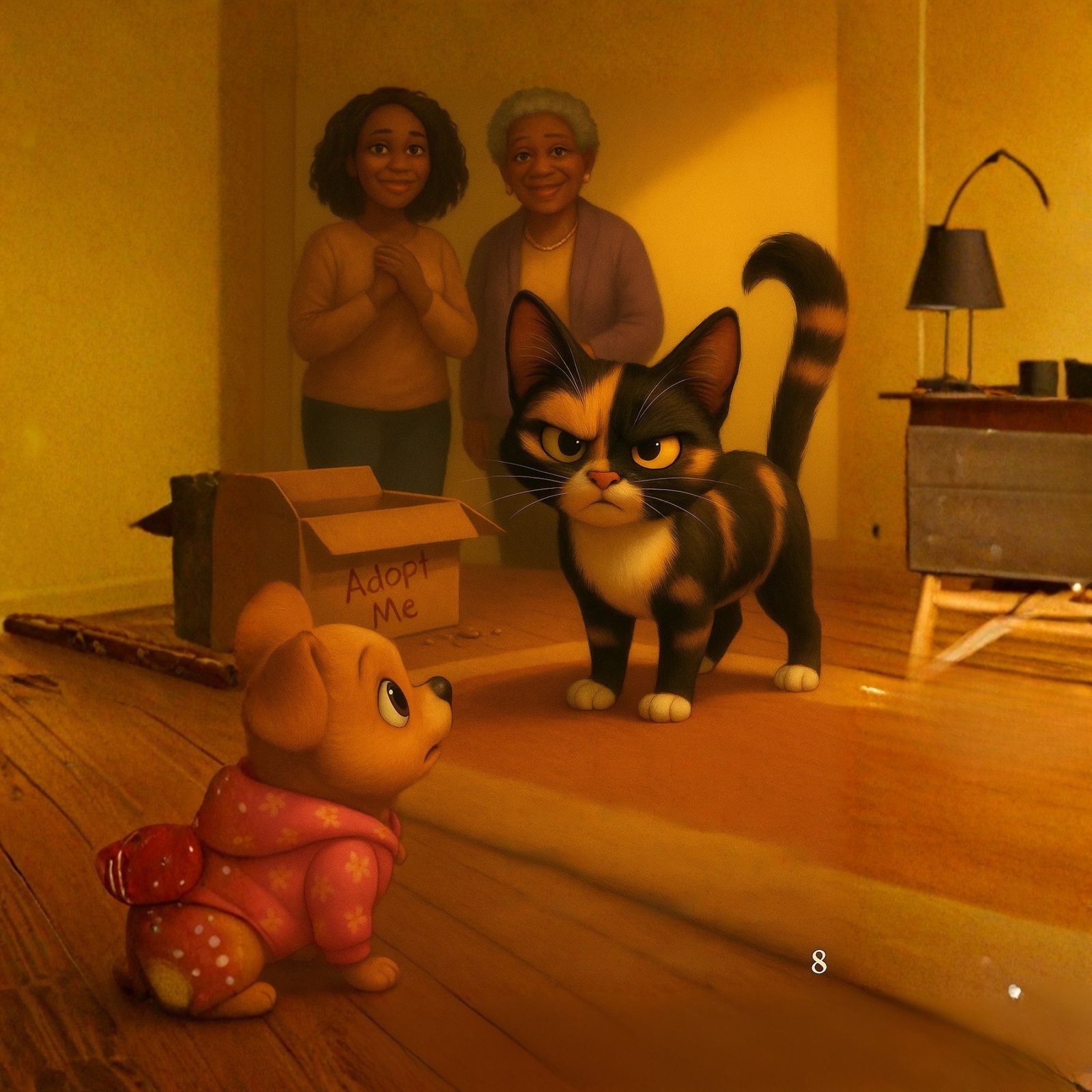
Its approach uses original characters, real-pet inspiration, visual evidence, authentic scenarios, and real-world problem solving to help learners build connections between what they notice and what they do next.
The Forest of Friends characters can provide familiar lenses for different learning habits:
- Detective Uno represents observation, evidence gathering, investigation, and questioning assumptions.
- Tank represents teamwork, communication, cooperation, and helping others.
- JJ represents careful observation and noticing details.
- Tuffie represents supervision, caution, safety, and checking conditions.
- Ricky Ticky represents troubleshooting, investigation, problem solving, and finding solutions.
These roles do not replace instruction.
They can help educators frame a question, introduce a discussion, or give students a memorable way to describe a learning behavior.
A student might be asked, “What would Detective Uno want us to check before deciding?”
Another might consider, “What information would Tank need to communicate to the team?”
The character becomes a prompt for thinking.
The academic work remains the center.
What Families Can Do at Home
Career-infused learning does not require a special program or elaborate equipment.
Families can invite children to examine everyday tasks:
- Read a package label and identify the most important directions.
- Compare two routes on a map.
- Measure ingredients for a meal.
- Organize materials for a household project.
- Explain how to complete a familiar task safely.
- Ask what information someone else would need to make a good decision.
The key question is simple:
“What skill are you using, and where might people use that skill in the real world?”
This keeps career exploration open-ended.
A child does not need to select a future occupation.
They can simply begin recognizing that academic skills have practical value.
Connecting Learning to Possibility
Career-infused learning helps students see school as preparation for participation: not only preparation for the next test.
It shows that reading can support workplace communication.
Math can support planning and resource decisions.
Science can support careful observation.
Social studies can support responsible choices in a community.
And visual literacy can support the ability to notice conditions, interpret evidence, compare possibilities, and act thoughtfully.
That is the foundation of Real Stories. Real Skills. Real-World Learning.
To explore story-based SEL and visual learning resources, visit MeMe SEL Academy, browse the MeMe JJ and Friends children’s book series, or learn more about the Detective Uno Journal.
Educators, curriculum leaders, and families can also connect with MeMe SEL Academy to explore conversations about career-infused learning, visual evidence, literacy, and real-world problem solving.
SEO Details
SEO Title: What Is Career-Infused Learning? Connecting Academics to Careers
Meta Description: Learn how career-infused learning connects academic skills to authentic professional situations through observation, evidence, communication, problem solving, and VNEC.
Primary Keyword: career-infused learning
Secondary Keywords:
- career-connected learning
- middle school career exploration
- real-world academics
- career readiness
- workplace literacy
- academic skills and careers
Suggested URL Slug:/what-is-career-infused-learning/
Suggested Internal Links: