

Explore how rescue dog stories for kids can invite conversations about real animals, emotional literacy, and belonging using the VNEC framework. A fair answer is yes, sometimes, but not because rescue stories are automatically better. Animal books can entertain, spark imagination, share information, or explore friendship. Stories inspired by real rescued pets add another layer: a child can consider that the animal at the center of the story had a life beyond the page.
That context can make rescue dog stories for kids a useful starting point for talking about fear, change, uncertainty, courage, friendship, and belonging. The value is in the storytelling approach and the conversations it makes possible, not in a claim that one kind of book works better for every reader.
What makes a rescue story different?
An invented animal character may be written to carry a clear message: be kind, include others, or keep trying. A story inspired by a real rescued animal may invite children to wonder how a real pet’s experiences connect with the story’s themes.
That distinction is worth explaining carefully. A book inspired by a real animal is still a story. It may use crafted language, illustrations, and narrative structure. “Inspired by real life” does not mean that every page is a documentary record.

For a parent, educator, counselor, or librarian, one practical difference to notice is how a book handles emotion:
- Naming an emotion: The text directly says what a character feels.
- Reasoning toward an emotion: The story offers words, actions, illustrations, or context that invite readers to gather clues and consider what a character might feel.
Both approaches can support a read-aloud. The second gives adults an opening to ask, “What do you notice?” before offering a label. That pause can help children practice visual inference and emotional literacy without needing to share a personal experience.
In the Forest of Friends series, titles including How Serena Met JJ and The Day Tank Didn’t Feel Like Tank offer different entry points for conversations about rescue, belonging, and difficult feelings.
What a real-pet backstory adds to a read-aloud
When children know that a story was inspired by a real rescued animal, the idea of change can feel less abstract. They may begin to ask: What might a pet need to feel safe? What can we know from a picture? What are we imagining?
There is no need to share upsetting details or make claims about an animal’s past that the book does not establish. Keep the conversation grounded in what the story says and shows.

For example, an adult might introduce How Serena Met JJ as the true rescue story that inspired the Forest of Friends, then invite children to distinguish what they know from the book from what they are wondering about. That is a small but meaningful literacy practice: separating evidence from inference.
It also keeps the animal’s experience from becoming a shortcut for interpreting a child. A rescued pet’s story may open a gentle conversation about change or belonging, but children do not have to compare their lives with the animal’s or explain their own feelings.
Use VNEC to gather clues before labeling
The VNEC framework, Visual Narrative Emotional Comprehension, offers a simple sequence for slowing down a read-aloud: Observe → Interpret → Compare → Apply. It treats emotional understanding like an investigation. First gather clues; then consider what they might mean.
Try the steps with an illustration or story moment:
- Observe: “What do you see?” Invite children to describe visible details, such as posture, gaze, distance between characters, movement, or setting. Stay close to the evidence.
- Interpret: “What might the character be feeling or needing?” Encourage more than one possibility. “Might” leaves room for uncertainty.
- Compare: “What does the text say? Does another detail support or change your idea?” Children can revisit their first interpretation when they find new clues.
- Apply: “What could someone do next?” A response might be giving an animal space, asking a trusted adult, or welcoming someone who is new.
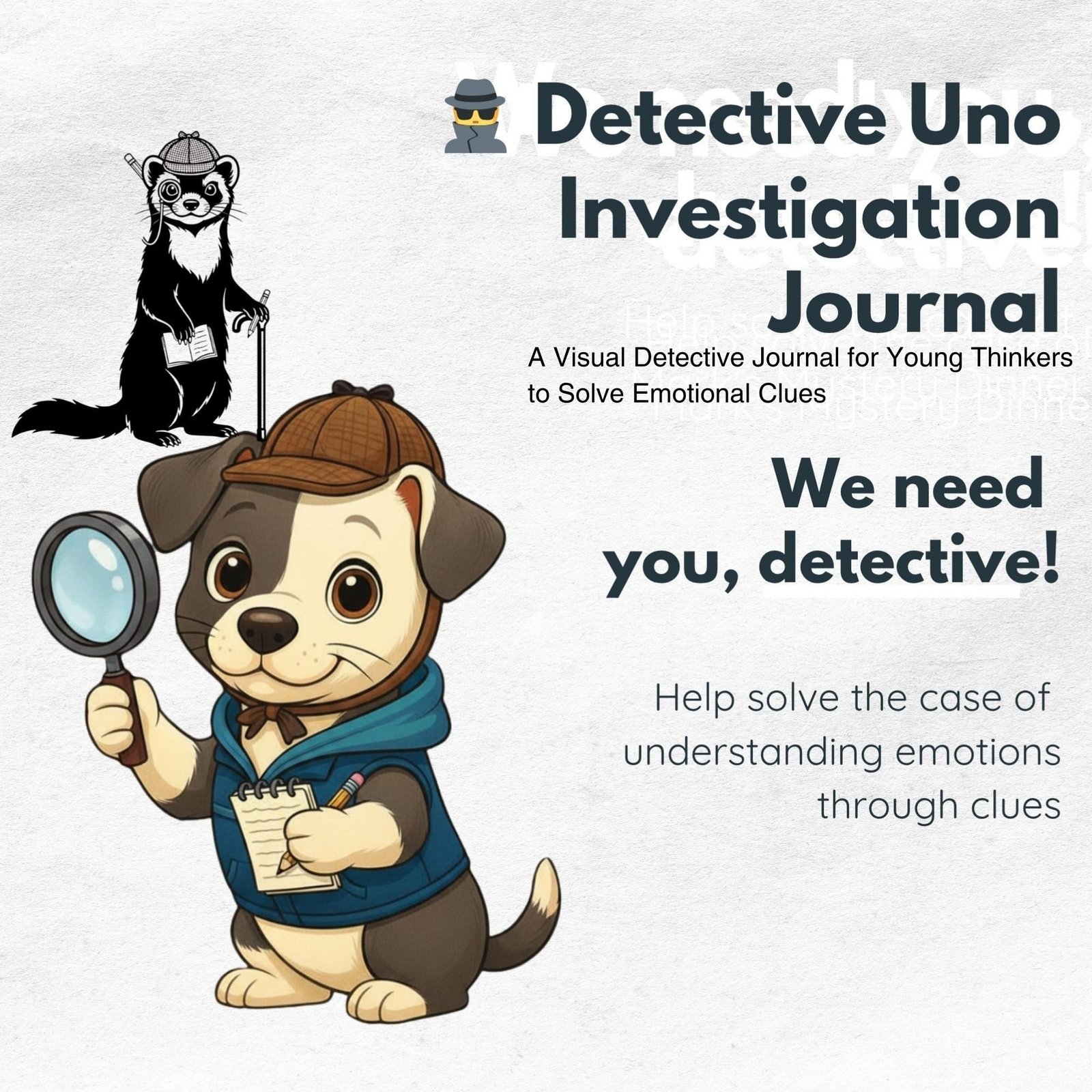
The Detective Uno Investigation Journal uses this investigative spirit to help young readers practice looking closely and explaining their thinking. Learn more about the journal and the MeMe SEL Academy.
Help children tell fiction from real life
Children can enjoy an invented animal and still understand that it is made up. They can also learn that a story inspired by a real animal may include creative storytelling. A clear, low-pressure explanation is enough:
“This character is part of a story. The book was inspired by a real rescued pet, but the story is told for readers. Let’s notice what the book tells us and what we’re imagining.”
For a class or library group, try a two-column discussion: “Clues from the book” and “Our ideas.” A child might point to an illustration in the first column and offer a possible feeling in the second. Ask what supports the idea, and remind the group that a guess is not the same as a fact.
This approach helps adults avoid treating an animal’s behavior as a definite explanation of its feelings. It also makes room for children to revise an interpretation. That is part of the discovery.
Connecting literacy with animal advocacy
MeMe, JJ & Friends’ Adopt-a-Heart initiative provides storytelling visibility for shelter pets and bridges literacy with animal rescue advocacy. It offers a way to connect reading and storytelling with attention to shelter pets, without suggesting that a book can promise a particular outcome.
To explore the series and its story-led approach, visit the Forest of Friends book series hub. Educators and families interested in guided story-and-observation activities can also review the VNEC SEL Detective Uno Bundle and the JJ Rescue & Belonging Bundle. For more reading and learning ideas, browse the SEL blog.
The honest answer
Rescue dog stories for kids can be different because real-pet inspiration adds a real-world frame to familiar animal-story themes. That frame can prompt questions about evidence, change, care, and belonging. It does not make every rescue story the right choice for every child, or make invented animal stories less valuable.
The most useful read-aloud may be the one that gives a child space to look closely, wonder, and talk at their own pace. Start with a clue. Stay curious. Let understanding grow one question at a time.